 Skip to content

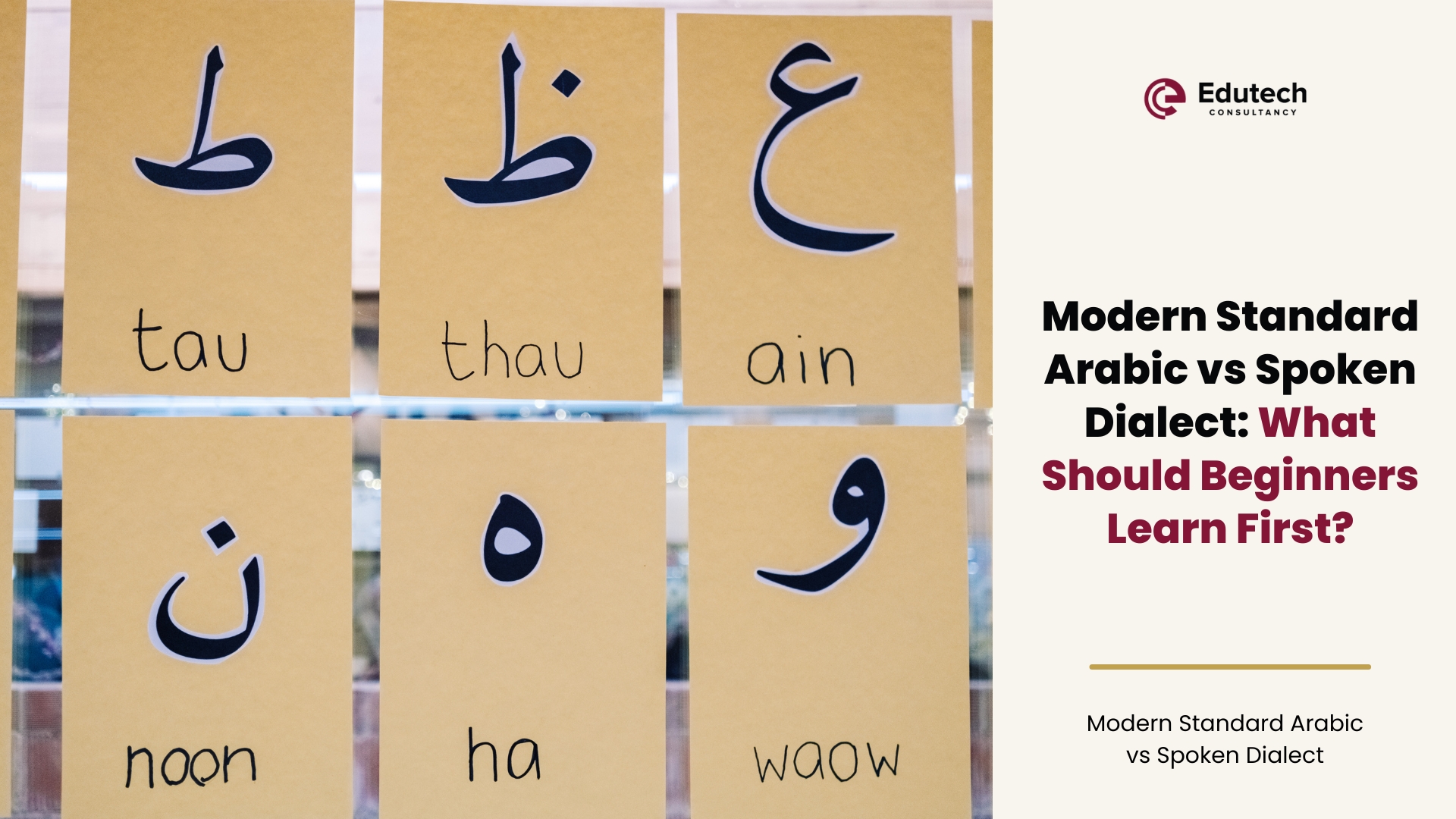
Modern Standard Arabic vs Spoken Dialect: What Should Beginners Learn First?
One of the most common questions beginners ask when starting to learn Arabic is:
Should I begin with Modern Standard Arabic or a spoken dialect?
Arabic is unique because it exists in two main forms. There is Modern Standard Arabic (MSA), which is used in formal communication, and there are spoken dialects, which people use in daily conversation.
Understanding the difference can help beginners choose the right starting point.
What Is Modern Standard Arabic?
Modern Standard Arabic is the formal version of the language used across the Arab world.
It is commonly used in:
- Books and literature
- News broadcasts
- Educational materials
- Official speeches
- Formal writing
MSA is understood in all Arabic-speaking countries, which makes it the shared standard of the language.
For learners, it provides a strong foundation in grammar, vocabulary, and sentence structure.
What Are Arabic Dialects?
Arabic dialects are the everyday spoken forms of Arabic used in different regions.
Examples include:
- Gulf Arabic
- Egyptian Arabic
- Levantine Arabic
- Moroccan Arabic
These dialects can differ significantly in pronunciation, vocabulary, and expressions. While they are natural for daily conversation, they are often not standardized or widely taught in formal education.
What Should Beginners Learn First?
For most beginners, starting with Modern Standard Arabic is the recommended approach.
Learning MSA first helps students:
- Build a clear understanding of Arabic grammar
- Develop strong reading and writing skills
- Recognize vocabulary used across many Arabic contexts
- Transition more easily to different dialects later
Once learners are comfortable with the fundamentals, they can gradually become familiar with spoken dialects depending on their environment or communication needs.
The Importance of Arabic Phonics for Beginners
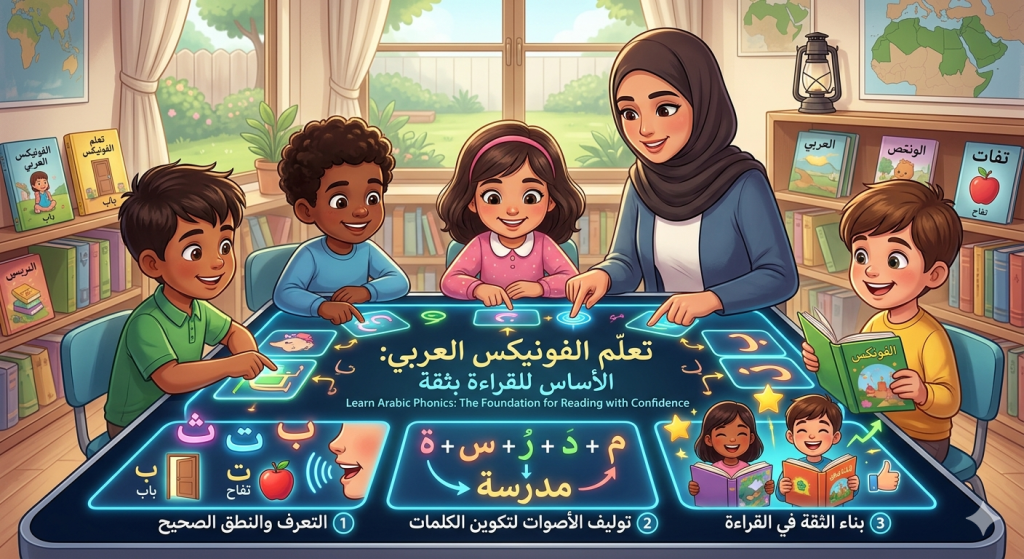
Before diving deep into grammar or dialects, beginners benefit greatly from learning Arabic phonics.
Arabic phonics helps learners:
- Recognize and pronounce Arabic letters correctly
- Understand how sounds combine to form words
- Build confidence in reading Arabic
A strong phonics foundation makes the learning process much smoother and more effective, especially for children and new learners.
Supporting Educators Through EduTech Consultancy
At Edutech Consultancy, the focus is on equipping educators with practical, classroom-ready strategies that improve how languages are taught and learned.
Through targeted training sessions and webinars, educators gain tools that simplify complex concepts like Arabic phonics and make them more accessible for students. The goal is not just to teach content, but to support effective instruction, confidence in delivery, and meaningful learning outcomes.
Stay Updated on Arabic Learning Opportunities
If you are interested in practical guidance for teaching or learning Arabic phonics, we host sessions that support educators and learners in building strong foundations.
📌 Follow us on Instagram to stay updated about our upcoming Arabic Phonics webinars and learning resources.
These sessions are designed to provide practical strategies that can be applied immediately in classrooms and learning environments.
