 Skip to content

How Schools Can Prepare Their Technology Roadmap Before the New Academic Year
As a new academic year approaches, schools often focus on admissions, staffing, and curriculum planning. But one critical area that is frequently delayed is technology planning.
A clear technology roadmap ensures that schools are not just reacting to challenges, but proactively building a system that supports learning, leadership, and operations.
At EduTech Consultancy, we help schools design structured, realistic, and future-ready technology roadmaps that align with institutional goals and long-term growth.
Why a Technology Roadmap Is Essential for Schools
A technology roadmap is more than just selecting tools or platforms. It is a long-term strategy that defines how technology will support the entire school ecosystem.
Without it, schools often face:
- Disconnected systems
- Poor adoption of digital tools
- Data silos across departments
- Inefficient communication
- Wasted investment in unused software
With a roadmap, schools gain clarity, structure, and direction.
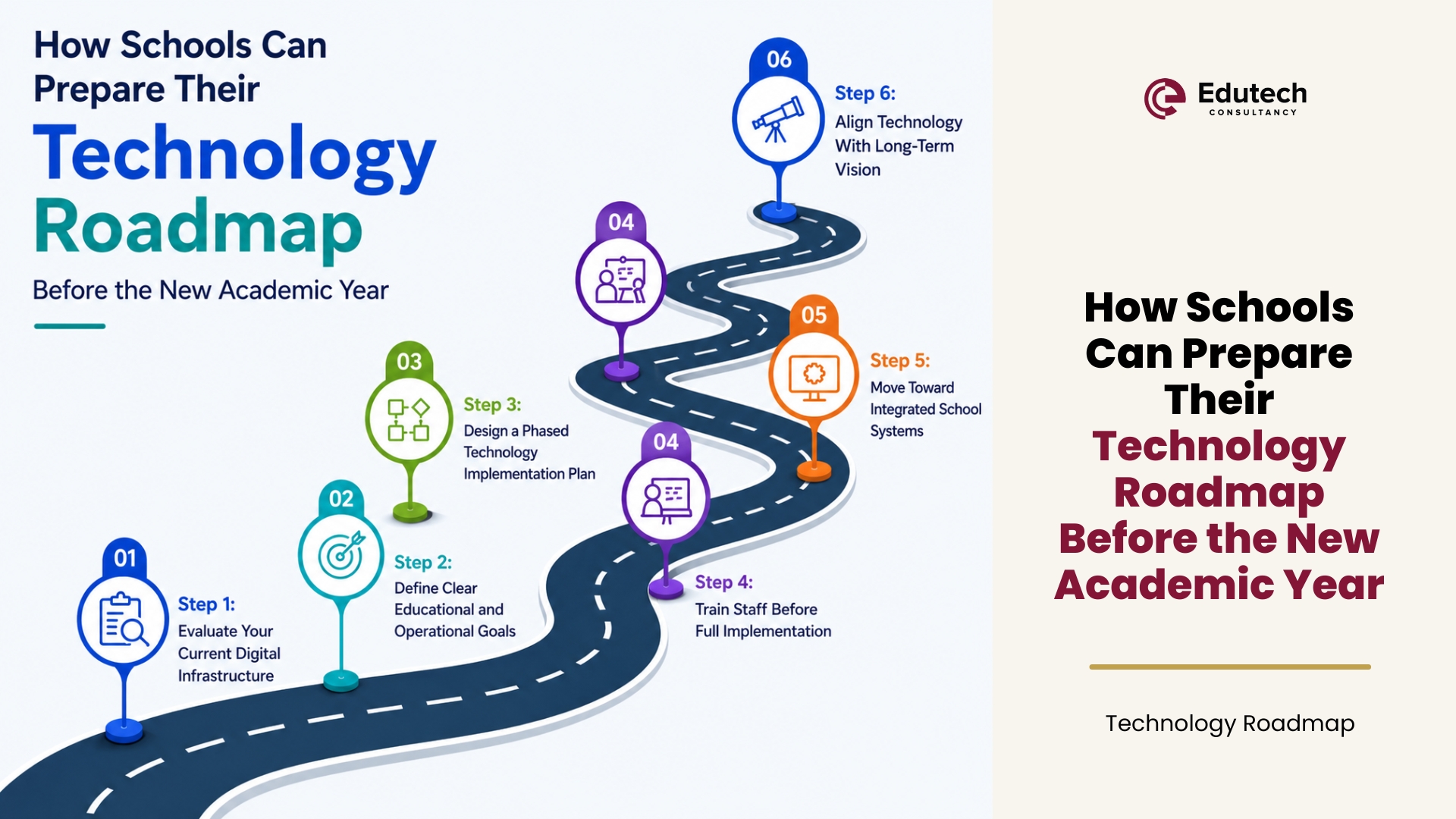
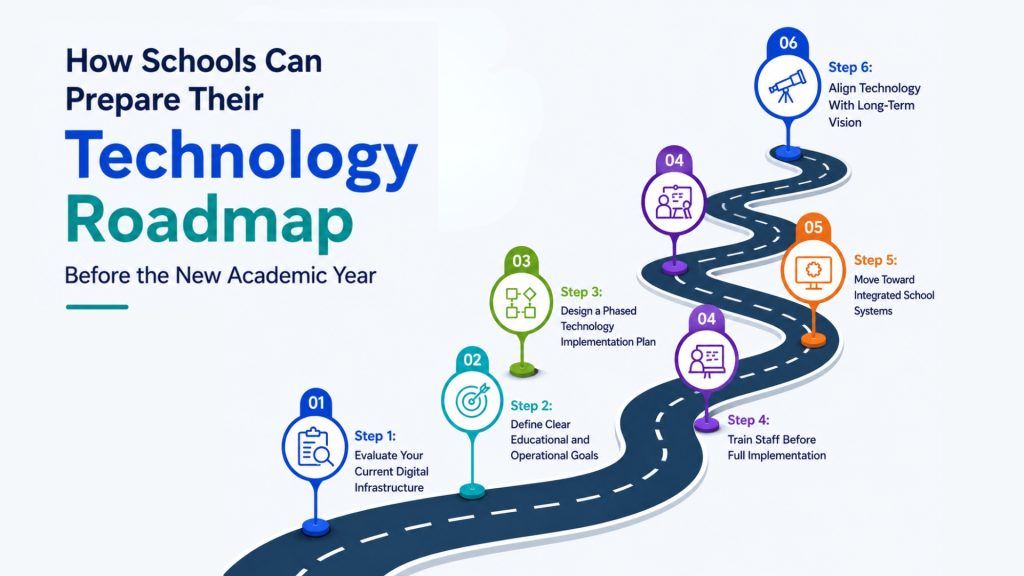
Step 1: Evaluate Your Current Digital Infrastructure
Before planning anything new, schools must understand their current situation.
This includes reviewing:
- School management systems
- Data handling processes
- Communication tools
- Classroom technology usage
- IT infrastructure and support
This assessment helps identify gaps and priorities.
Step 2: Define Clear Educational and Operational Goals
Technology should always support school goals, not replace them.
Leadership teams should define:
- Academic performance targets
- Teacher workload reduction goals
- Student engagement improvements
- Administrative efficiency objectives
- Parent communication expectations
Once goals are clear, technology decisions become much more focused.
Step 3: Design a Phased Technology Implementation Plan
A successful roadmap is never implemented all at once.
Instead, schools should follow a structured phased approach:
- Phase 1: Core systems (student data, attendance, communication)
- Phase 2: Classroom and learning tools
- Phase 3: Reporting and analytics systems
- Phase 4: Advanced innovation (AI, automation, predictive insights)
This ensures smooth adoption and avoids disruption.
Step 4: Train Staff Before Full Implementation
Even the best systems fail without proper training.
Schools must ensure:
- Teachers understand how to use new tools
- Administrative staff are trained on systems
- Ongoing support is available
- Digital confidence is built across departments
Training is not optional, it is a core part of implementation.
Step 5: Move Toward Integrated School Systems
Instead of using multiple disconnected tools, schools should move toward integrated platforms that bring everything together.
For example, schools exploring digital transformation can benefit from structured ERP-based systems designed for education.
👉 Read more here:
Thinking of Odoo for Your School in Qatar? Here’s What You Need to Know
Integrated systems help schools:
- Centralize student and staff data
- Improve reporting accuracy
- Reduce manual workload
- Support real-time decision-making
Step 6: Align Technology With Long-Term Vision
A strong roadmap is not just about the next academic year, it is about long-term transformation.
Schools should ensure that technology decisions:
- Support future scalability
- Align with digital learning trends
- Prepare for AI integration in education
- Improve institutional efficiency over time
Conclusion
A well-planned technology roadmap helps schools enter the new academic year with clarity, confidence, and structure.
It ensures that technology becomes a driver of improvement, not a source of confusion.
Book a School Consultation Meeting
If your school is planning its technology roadmap for the upcoming academic year, we can help you design a clear and practical implementation strategy tailored to your needs.
We offer consultation for school leadership teams, IT departments, and administrators.
👉 Book your consultation on WhatsApp:
Chat with EduTech Consultancy
