 Skip to content

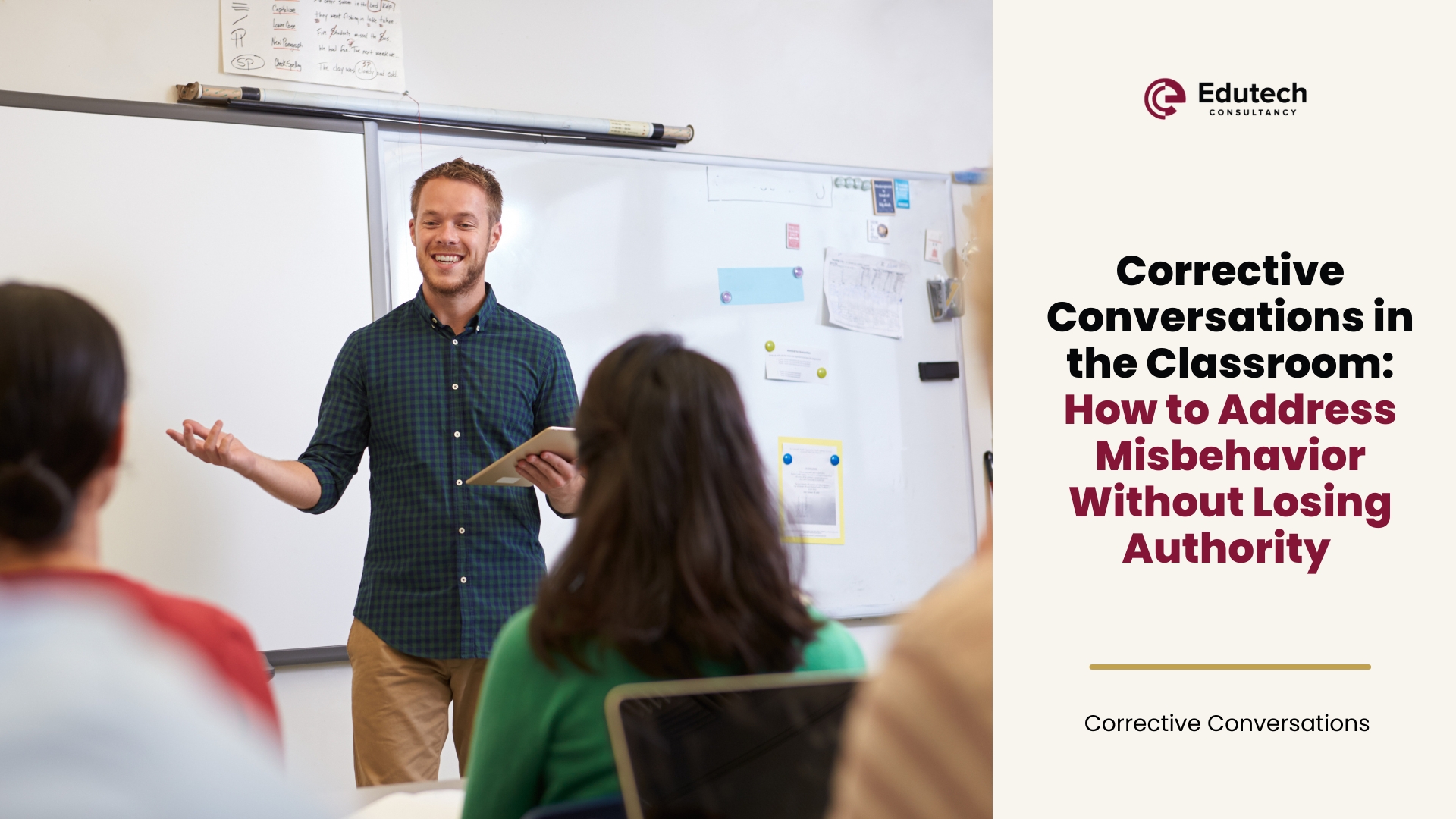
Top Corrective Conversations in the Classroom for Better Classroom Management
Classroom management is one of the biggest challenges teachers face. Even well-planned lessons can be disrupted when misbehavior arises.
The key isn’t just discipline , it’s how teachers communicate in the moment. The way misbehavior is addressed can either escalate a situation or restore calm while maintaining student engagement.
Why Corrective Conversations Matter
Corrective conversations are short, intentional interactions that help guide students back on track without undermining teacher authority.
When done effectively, they:
- Protect instructional time
- Maintain a respectful classroom environment
- Reinforce expectations consistently
- Support student accountability
Poorly handled misbehavior like long lectures, emotional reactions, or unclear instructions can quickly reduce engagement and weaken authority.
Principles of Effective Corrective Conversations
Here are some key ideas for addressing behavior while keeping control and respect in the classroom:
- Be Clear and Consistent
Use direct, calm language that communicates expectations. Avoid over-explaining or repeated warnings. - Stay Structured
Follow a framework to ensure every interaction is intentional and productive. - Focus on Behavior, Not Personality
Address the action, not the student, to prevent embarrassment and defensiveness. - Redirect Quickly
Corrective conversations should be brief and solution-focused so that learning can continue without major disruption. - Adapt to Age and Development
Younger students require different language and guidance than older students. Tailoring your approach ensures it is effective for every grade level.
The Impact on Classroom Engagement
Small adjustments in how we respond to misbehavior can have a big effect on engagement. Students are more likely to follow expectations when teachers:
- Maintain authority calmly
- Apply consistent consequences
- Keep lessons moving
- Reinforce positive behavior
By addressing behavior efficiently, teachers protect learning time instead of adding more rules or spending hours on discipline.

Learn Practical Frameworks Through EduBites
To help educators implement these strategies, the EduBites Community is hosting a complementary webinar focused on corrective conversations:
Webinar Details
📅 Date: 1st April
⏰ Time: 4PM Doha Time
💻 Platform: Microsoft Teams
Who Should Attend
Teachers, teaching assistants, counselors, behavior support staff, and anyone supporting classroom management
What You Will Learn
- Apply two practical communication frameworks for addressing misbehavior across grade levels
- Decide which framework to use based on student age and development
- Avoid common mistakes that escalate behavior or weaken authority
- Use clear, structured language immediately in real classroom situations
Key Takeaway:
You’ll leave with the FIRR Conversation Framework, a ready-to-use structure to maintain authority, accountability, and engagement in your classroom.
Corrective conversations are not about more rules, they are about smarter communication. With the right strategies, misbehavior becomes an opportunity for teaching, not disruption.
Join our EduBites community complementary webinar and start transforming classroom interactions today.
Register yourself for our upcoming complementary webinar
